
Bear anatomy
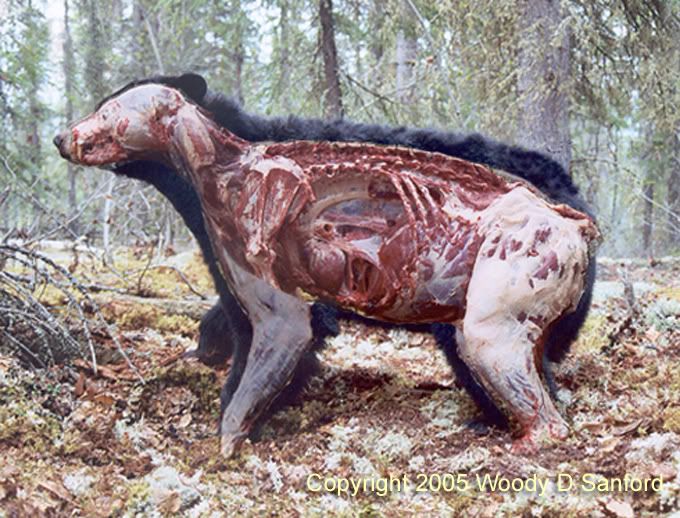
If I want know how the bear moves and why it moves that way i need to begin to look at the bear's anatomy and bone structure. The bears anatomy is very easily to identify, some of the bears only way around 66 pounds however polar bear can way up to 1,500 pounds. Standing up bears can reach up to 4 feet to 10 feet. The most obvious trait with a bears anatomy is its bulkiness shape and weight. The males of the species tend to be the heaviest and are usually the far stronger.
Bears have very thick fur and skin which help them to keep warm whilst hibernating and to prevent insect piercing the skin. Also the bulkiness surrounding the body is mostly fat around the muscle, and this weight is gained by gathering carbs for the winter.
The bears claws are retractable strangely enough and they can choose when to use them, they use their claws to capture prey, climb trees and retrieving buried foods. The nose is highly sensitive and can pick up smell and scent from miles away. And its the bears main skill and function it uses to gather food and roaming the lands.
The bear usually walks on all fours mainly due to their sheer size, they also walk on the soles of their feet rather than the toes like most carnivores. As they walk the weight of the body is continually shifted towards the back. this why most small creature can reach the speed of 35 miles per hour. When a bear chooses to stand on its hind legs the speed is reduced but the bear increases in height and is a sign of aggression which is used to scare away other animals.
The overall bear anatomy is designed to survive in a given environment.

The movement and posture
I want to start making studies and observing the bears movements and posture. What i did notice about a bear is that it hardly ever walks in a straight line and tend to wander and drift about with not a care in the world. The bears neck line is not very defined and tends to look like it apart of the bears body the reason for this is that the bears fat cover and hangs over its neck. You can clearly see the bears weight shift around as it walks on land this is also more noticeable due to the fat.
The bears eyes and ears are very small in comparison to the rest of its body which is very different to the human body. Also during the video I noticed how the bear cubs are in constant need for protection as they are far to unaware and innocent to protect themselves very much so for a human child.
Studies
These are first studies of the bear and I plan to go into more detail and look how they move and their facial expressions. I have found when drawing bears they don't really have an obvious neck line and their head size and form is much larger than human proportion. Also I have created a temporary page layout for my art book, I have chosen to keep it clean and simple so my designs stand out more.


No comments:
Post a Comment